

Classified Balance Sheet Example Definition Template Explanation
Content

It is the financial statement that demonstrates the accounting equation is in balance. The classifications used will vary depending on the type of business you own, and there is no one way to format a classified balance sheet properly. The chart below lists common balance sheet classifications and examples of the balance sheet accounts that are included in each classification. A balance sheet is a financial statement that displays the total assets, liabilities, and equity of your business at a particular time.
Normally, intangible assets are only listed on the balance sheet if they have been acquired rather than they are developed in-house. Thus, their value might be wildly understated – by not including a logo which is globally recognized, for example – or just as overstated wildly. Accumulated depreciation is a contra asset account to depreciable assets such as buildings, machinery, and equipment. This account shows the total depreciation taken for the depreciable assets. On the balance sheet, companies deduct the accumulated depreciation (as a contra asset) from its related asset. Marketable securities are temporary investments such as short-term ownership of stocks and bonds of other companies.
1 Financial Statement Disclosure Decisions
Track travel spending with this free online spreadsheet. Keep track of your grant budget details with this easy-to-customize template. Take your organization skills to the next level without writing a single line of code. Managing your construction budget has never been easier.
Other intangible assets include leaseholds and goodwill. Long term assets take longer than one year to consume and long term liabilities take longer than one year to pay. Examples of long term assets include real property, commercial equipment and machines. Long term liabilities include notes on assets, interest expense on loans and large business credit card balances.
How to use the accounting equation with a classified balance sheet
Once you have viewed this piece of content, to ensure you can access the content most relevant to you, please confirm your territory. These materials were downloaded from PwC’s Viewpoint (viewpoint.pwc.com) under license. LO4 – Explain the purpose and content of the auditor’s report. Harold Averkamp (CPA, MBA) has worked https://www.bookstime.com/ as a university accounting instructor, accountant, and consultant for more than 25 years. He is the sole author of all the materials on AccountingCoach.com. Our writing and editorial staff are a team of experts holding advanced financial designations and have written for most major financial media publications.
Income taxes payable are the taxes paid to the state and federal governments by a corporation on its income. Interest payable is interest that the company has accumulated on notes or bonds but has not paid by the balance sheet date because it is not due until later. The objective of financial statements is to communicate information to meet the needs of external users. In addition to recording and reporting verifiable financial information, accountants make decisions regarding how to measure transactions. Applying GAAP can present challenges when judgment must be applied as in the case of cost-benefit decisions and materiality. On the balance sheet, current assets are normally reported before non-current assets.
Operational Management
You can even switch to a calendar or card view to see your company information in a way that works best for you. With a custom online Classified Balance Sheet that’s easy to access from any device, you’ll be able to more easily understand and present accounting information about your company. The company’s balance sheet reports only those accounts whose balances must be carried forward to next year. PwC refers to the US member firm or one of its subsidiaries or affiliates, and may sometimes refer to the PwC network. This content is for general information purposes only, and should not be used as a substitute for consultation with professional advisors. The long-term section lists the obligations that are not due in the next 12 months.
What is normal balance and classification in financial statements?
What is a Normal Account Balance? A normal balance is the expectation that a particular type of account will have either a debit or a credit balance based on its classification within the chart of accounts.
Current assets are cash and other assets that a business can convert to cash or uses up in a relatively short period – one year or one operating cycle, whichever is longer. Companies in service industries and merchandising industries generally have operating cycles shorter than one year. Companies in some manufacturing industries, such as distilling and lumber, have operating cycles longer than one year. However, since most operating cycles are shorter than one year, the one-year period is usually used in identifying current assets and current liabilities. Common current assets in a service business include cash, marketable securities, accounts receivable, notes receivable, interest receivable, and prepaid expenses.
Project Budget Template
Long term liabilities are also mostly interest-bearing obligations. Companies prefer to take on high levels of long-term debt for reasons including longer payback period, lower cost of debt and potential to raise larger amounts of capital. The internal capital structure policy/decisions of a company will determine how much of long-term debt is raised by a company. The one major downside of high debt levels in the accompanying higher levels of financial leverage which could severely amplify a company’s losses during an economic downturn.
Liabilities can be classified into current, for those due in less than one year, and long-term, for those due in over one year. The company seems to be strapped for cash because the vast majority of its substantial holdings are in non-liquid assets, specifically patents and subsidiary company stock. To determine whether or not this is acceptable, a look at industry standards and an evaluation of the specific assets would be in order. For example, a look at the situation of the subsidiary LMN, whose situation was evaluated in example one, might cause a sigh of relief since, clearly, the subsidiary’s cash situation is ideal. Further analysis of the patent could corroborate this or inspire the opposite. Without a look at the https://www.bookstime.com/articles/what-is-a-classified-balance-sheet, it would have been difficult to assess the company’s situation and determine the points of greatest concern.
Liabilities
The classifications are defined by the individual company. This is your opportunity to group and analyze sections of financial data that are most relevant to your success. Within these classifications, you then assign particular accounts that correlate with the type of asset, liability, equity, or investment. As an example, here’s how you might classify the fixed assets section. The classified balance sheet takes it one step further by classifying your three main components into smaller categories or classifications to provide additional financial information about your business. Once used primarily by larger companies, small business owners can also benefit from running a classified balance sheet.
The ability to produce superior profits is a valuable resource of a business. Normally, companies record goodwill only at the time of purchase and then only at the price paid for it. The Home Depot has labeled its goodwill “cost in excess of the fair value of net assets acquired”.
Other Entity Forms
The current portion of this note on the January 31, 2023 balance sheet would be $12,000 (calculated as 12 months X $1,000/month). The remaining principal would be reported on the balance sheet as a long-term liability. You’ll see that the unchanging assets you’d typically have in an office setting, or even a workshop, can be classified and tracked here. However, this exact formation may not be the same as say a high-level manufacturer.
- Is it presented with clarity and conciseness to make it understandable?
- This information can be used by investors, creditors, and other interested parties to make informed decisions about whether to invest in or lend to the company.
- A note receivable appears on the balance sheet of the company to which the note is given.
- Different accounting ways and systems of dealing with depreciation and inventories would be also changing the figures which is posted to a balance sheet.
- The classifications used will vary depending on the type of business you own, and there is no one way to format a classified balance sheet properly.
Additional capital surplus or paid-in-capital represents the amount shareholders have invested more than the “common stock” or “preferred stock” accounts, which is based on par value rather than market price. Shareholders equity does not been directly related to a company’s mention market capitalization. The latter it is based on the current price of any stock. While paid-in capital is the mainly sum of the equity that are been purchased at any price. Within the segments of assets, accounts which are listed from top to bottom in order for their liquidity. They have been divided into current assets, which can also be converted to cash in less than one year, and long-term assets or non-current, which cannot.
The Advantages and Disadvantages of a Classified Balance Sheet
Our experts love this top pick, which features a 0% intro APR until 2024, an insane cash back rate of up to 5%, and all somehow for no annual fee. Prepaid expenses also represent the value which has already been paid for, such as advertising contracts, insurance or rent. Office furniture includes file cabinets, desks, chairs, and shelves. Go to My Forms and delete an existing form or upgrade your account to increase your form limit.
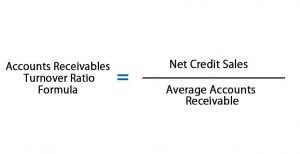
It is also a key point to keep in mind that some ratios would be needing information that are from more than one of financial statement, such as the balance sheet and the income statement. Financial ratio analysis utilizes formulas for gaining insight into a company and its operations. For a balance sheet, by using financial ratios like the debt-to-equity ratio which can even provide a good sense of company’s financial condition.